

How SehatYab Reviews Its Health Content: Editorial and Clinical Review Policy
This page sets out how health content on SehatYab is produced, what we accept as evidence, who checks clinical claims before they are published, how often each type of page is reviewed, and how to tell us we have got something wrong. It applies to every page on this website. It is written to be checked against, not to be taken on trust.
SehatYab is a registered online mental health clinic (Punjab Healthcare Commission licence R-05172, since 2016). Operated by Huda Healthcare Private Limited. Rated 4.7 by 500+ patients on Google.
SehatYab is a Punjab Healthcare Commission licensed online mental health clinic, licence R-05172, operating since 2016. Every clinical page is researched from peer reviewed literature, ICD-11, DSM-5-TR and WHO guidance, then reviewed by a PMDC licensed clinician before it publishes. Corrections re enter clinical review, and every page shows a real last updated date.
Why this editorial policy exists
Mental health information changes decisions. Someone reads a page about depression at two in the morning and decides whether to tell their family. Someone reads a page about ADHD and decides whether their child needs an assessment. Someone reads a page about therapy and decides whether it is worth the money and the argument at home. Health content is not neutral reading material, and a site that publishes it carries a duty to say plainly who writes it, who checks it, what counts as evidence, and how a reader can tell us we are wrong. That is what this page does.
This is a policy document, not a description of an aspiration. Everything below is either a rule the site works to, or a standard the site holds itself to. Where the two differ, we have said which is which. If you find content on SehatYab that does not meet what is set out here, that is a defect and we want to hear about it. The route for that is in the corrections section.
Who writes SehatYab's medical content
Content on SehatYab is written by the SehatYab editorial team, working from the sources listed further down this page. Clinical content, meaning anything that describes a condition, its symptoms, its causes, how it is assessed, or how it is treated, is reviewed by a clinician on SehatYab's panel with relevant expertise before it publishes. A page about autism assessment is reviewed by someone who assesses autism. A page about medication and therapy is reviewed by a psychiatrist. Non clinical content, such as pages about booking, timings or payment, does not go through clinical review, because there is no clinical claim in it to check.
The overall editorial review is signed off by Dr. Qurrat Ulain, Consultant Psychiatrist and PMDC licensed physician. We do not publish "medically reviewed by" bylines on every article, and that is a deliberate choice: a named byline creates an impression of individual authorship and individual endorsement that would not be accurate. Content here is produced by a team and checked against a standard. The clinicians who review it are the same clinicians who see patients through SehatYab, and their qualifications, registrations and areas of practice are set out on our clinical team credentials page and on each clinician's own profile. What we will say plainly is the thing that actually matters to a reader: a clinician reads the clinical claims on a clinical page before that page goes live, and a page does not publish without that step.
The diagram below sets out the sequence content moves through. Note the branch on the left. A correction raised after publication does not get patched quietly into the page: if it touches a clinical claim, it re-enters clinical review at the same point a new draft would.
Sources we accept and sources we do not
A claim on this site has to be traceable. This table is the standard our editorial team researches to, and the standard a reviewing clinician checks against.
| Accepted | Not accepted |
|---|---|
| Peer reviewed clinical literature and systematic reviews (via PubMed, journal DOIs) | A single anecdote or personal testimonial presented as though it were evidence |
| Diagnostic manuals: ICD-11 and DSM-5-TR | Unattributed blog posts, content farm articles, and pages with no identifiable source |
| Guidance from recognised health bodies: WHO, NHS, NIMH, APA, NICE | Promotional material produced by manufacturers of medicines, supplements or devices |
| National data published by recognised statistical or health authorities in Pakistan and abroad | AI generated summaries used as a primary source for a clinical claim |
| Diagnostic and treatment guidance from recognised professional bodies | Claims circulating on social media, in forwarded messages, or in short video health advice |
| The clinical judgement of the reviewing clinician, where they are qualified in that area | The clinical opinion of anyone outside their own area of practice |
Where a figure appears on this site, its source is named next to it and linked. If you find a number on a SehatYab page with no source attached, that is a defect and we would like to be told.
What we do not do
These are the limits we work inside. They are easier to check than a claim about quality, which is why they are written this way.
We do not name medicines
No specific medicine, brand name or dose appears anywhere on this site. Not in an article, not in a symptom list, not in an example. Prescribing is a decision made by a doctor for one person after assessing that person, and a website is not able to do it.
We do not tell you to change treatment
We do not publish content that instructs a reader to start, stop, increase or reduce any treatment. Where a page discusses treatment, it describes what the options generally are and says that the decision belongs to you and your clinician.
We do not publish unsourced numbers
A statistic on this site carries its source and a link. If we cannot attribute a figure to something a reader could go and check, we make the point qualitatively instead of inventing precision that is not there.
We do not publish sponsored clinical content
No clinical page on this site is paid for, placed, or influenced by an outside party. We do not accept payment to feature a treatment, a product, a supplement, a device or another provider.
Clinicians are not paid to endorse content
Reviewing clinical content is part of clinical work at SehatYab, not a promotional arrangement. No clinician receives a payment, a fee or any other benefit in exchange for approving, endorsing or lending their name to an article.
We do not use patient details
No example, scenario or case description on this site is drawn from a real SehatYab patient. Where a page uses an illustrative example, it is constructed to show a pattern, and it does not describe any individual we have treated.
Review cadence by content type
Content decays. Guidance changes, services close, numbers change, and a page that was accurate two years ago can be quietly wrong today. The cadences below are the standard the site works to. They are minimums, and a page is re-reviewed sooner whenever something relevant changes.
| Content type | Reviewed | Why that cadence |
|---|---|---|
| Condition and treatment pages | At least once every 12 months, sooner if diagnostic or treatment guidance changes | The clinical picture of a condition moves slowly. What changes faster is how it is described, so an annual pass catches drift in language and classification. |
| Medication related content | At least once every 6 months | Safety information, interactions and availability change more often than anything else we write about, and a reader may act on what they read here before their next appointment. |
| City and service pages | At least once every 12 months | What changes is which clinicians are available, which languages are covered and which services are offered, rather than the underlying clinical content. |
| Fees and payment pages | At least once every 3 months, and immediately whenever a price or payment method changes | A reader makes a financial decision on this content. An out of date figure here is not a small error, so this is the shortest cadence on the site. |
| News sensitive or resource directory pages | At least once every 6 months, and whenever a listed service is reported as changed | Helpline numbers, government services and free clinic listings change without notice, and a wrong number on a crisis resource page is the most damaging error we could publish. |
Every page carries a visible last updated or last reviewed date. That date changes when the content changes substantively. We do not refresh dates on unchanged pages to make content look newer than it is.
The six checks a clinical reviewer runs
Clinical review here is not a proofread. It is a check against six specific things, and a page that fails any of them goes back to the editorial team, not on to publication.
Our position on AI in content production
Drafting tools, including AI tools, may be used in producing content on this site. We are saying that plainly, because a policy page that dodged the question would be worth nothing. What matters is not whether a tool touched a draft, but what is allowed to become a published clinical claim. The rules are these.
- No clinical claim is published on the basis of an AI generated source. An AI summary is not a source. If a claim cannot be traced to something in the accepted sources column above, it does not go on the page.
- Every clinical page is read by a human clinician before publication. There is no route by which clinical content reaches this site without that step.
- Responsibility for accuracy rests with SehatYab regardless of what tools were used at any stage of drafting. A tool is not an explanation for an error, and we will not offer it as one.
Accuracy, and saying when we do not know
Where evidence on something is genuinely mixed, we say it is mixed. That is a harder thing to write than a confident answer, and it performs worse, because readers and search engines both reward certainty. We do it anyway, because presenting a contested question as settled is a way of being wrong that is very hard for a reader to detect. If a page tells you that the evidence is limited, that different clinicians take different views, or that a question has not been well studied in Pakistan, that is a deliberate statement rather than a gap in the writing.
The same applies to availability. Where a treatment, an assessment or a service is not realistically available in Pakistan, or is available only in a handful of places, we say so on the page instead of describing it as though a reader could simply go and get it. Being told about an excellent treatment you cannot access, and only finding out after three phone calls that nobody offers it, is worse than not being told.
Written for Pakistan, not adapted from elsewhere
Content on this site is written for readers in Pakistan. International guidance is used as evidence, but it is applied to what actually exists here rather than reproduced as though the surrounding system were the same. A guideline that assumes a referral pathway, an insurance model, a waiting list or a service that does not exist in Pakistan is not useful to a reader in Multan, and copying it across without saying so is a quiet form of inaccuracy. Where we describe a pathway, we describe the one a reader here can actually follow.
Urdu and Roman Urdu content
Some of our content is written in Urdu or Roman Urdu, and Urdu terms appear inside English pages where that is how the thing is actually said. Urdu content is held to the same standard as English content, and it goes through the same clinical review. It is reviewed by someone who reads the language, not machine translated from an approved English page and published on the strength of the English review. Translation is where clinical meaning most often slips, particularly around words for distress, psychosis and self harm, where the everyday Urdu term and the clinical term are not the same thing, and the everyday term often carries an insult inside it. Where no accurate Urdu term exists, we use the English term and explain it rather than reaching for the nearest colloquial word.
The clinicians whose expertise our content is reviewed against
Clinical review is carried out by clinicians on SehatYab's panel. Editorial sign off rests with Dr. Qurrat Ulain, Consultant Psychiatrist. Reviewing is assigned by area of expertise, and no page on this site is attributed to a single individual as its reviewer.
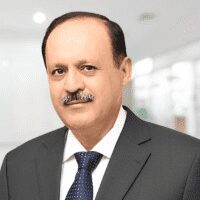 Consultant Psychiatrist
Prof. Dr. Ghulam Rasool
Adult, geriatric, forensic and addiction psychiatry. Consults in Urdu, Punjabi, Sindhi, Seraiki, Pashto and Balochi.
 Consultant Psychiatrist
Dr. Syed Masroor Ali
Child and adolescent, addiction, personality and forensic psychiatry. Consults in English, Urdu, Sindhi, Saraiki, Punjabi, Malay and Hindi.
 Consultant Psychiatrist
Dr. Muhammad Ather
Depression, anxiety, OCD, psychosis, child and adolescent mental health and addiction. Consults in English, Urdu, Punjabi and Saraiki.
 Clinical Psychologist
Ms. Sadia Irfan
Depression, anxiety, panic, OCD, phobias, burnout and trauma. Consults in English and Urdu.
How to tell us we are wrong
Errors are not rare events on any health website, including this one. The measure of an editorial policy is what happens after one is found, so here is the process in full.
Send it to the support team
Message the SehatYab support team on WhatsApp, or use the form on our contact page. Tell us the page address and what is wrong with it. You do not need to be a clinician, you do not need to cite a source, and you do not need to explain who you are.
It is triaged
Anything urgent is handled first: a wrong helpline number, a missing safety warning, or a claim that could lead someone to change treatment. Content that is unclear or badly worded rather than wrong is logged and dealt with at the next scheduled review of that page.
Clinical claims go back through review
If the correction touches a clinical claim, the amended text goes back to a panel clinician before it is republished. We do not edit a clinical statement on the strength of a message and put it straight back on the site.
The date changes
When content changes substantively, the last updated date on the page changes with it. Where a published statement was materially wrong rather than merely imprecise, we correct the statement rather than quietly deleting the paragraph.
Conflicts of interest, stated openly
SehatYab is a commercial online clinic. This website exists in part to bring people to our online services, and content on it routes readers towards booking a consultation. Pretending otherwise on a page about honesty would be self defeating, so we are stating it directly rather than leaving you to work it out.
The boundary is this. Clinical content is not shaped by which online service is more profitable. A page does not recommend psychiatry over psychology, or a longer course of therapy over a shorter one, because of what it earns. Where a reader does not need a paid service at all, our pages say so: several of them point to free assessments, to public and low cost services in Pakistan, to government helplines, or simply to waiting and seeing whether something settles on its own. Where the honest answer to a question is that you should see someone in person, or go to a hospital, or speak to your existing doctor rather than book with us, that is the answer the page gives.
We also do not accept payment from any third party to feature their treatment, product or service in our content, and no clinician on our panel receives any benefit for reviewing or endorsing an article.
Read the rest of the trust documentation
How we verify clinician credentials, and what our registration as a healthcare provider actually covers.
Editorial standard, compared with directory listings
Directory sites like Marham, Oladoc and InstaCare list doctors. SehatYab is a licensed clinic with its own panel and its own editorial pipeline. This is the honest side by side.
| Dimension | SehatYab | Directory listings |
|---|---|---|
| Regulatory registration | PHC licensed clinic (R-05172), since 2016 | Directory of independent providers, no unified regulator |
| Clinical review of content | Every clinical page reviewed by a panel clinician against six checks | Directory pages rarely have named clinical review |
| Named editorial reviewer | Dr. Qurrat Ulain, Consultant Psychiatrist, publicly listed | Usually none |
| Published review cadence | 3, 6 or 12 months by content type, with visible last updated dates | Not published |
| Sources policy | Peer reviewed, ICD-11, DSM-5-TR, WHO, NHS, NIMH, APA, NICE | Varies, often unstated |
| Corrections process | WhatsApp or contact page, clinical corrections re-enter clinical review | Not published |
| Modalities | Online only: audio, video, chat, in English and Urdu | Mix of in person and video, uneven |
| Overseas Pakistani coverage | UK, USA, UAE, Saudi Arabia, with time zone booking | Rare |
Questions about how this content is produced
Direct answers to the questions readers most often ask about our editorial and clinical review process.
Sources reviewed for this policy
The organisations and publications this editorial policy is calibrated against. Each is linked to its own primary source.
- International Classification of Diseases, Eleventh Revision (ICD-11), World Health Organization, 2024 release.Used as the diagnostic classification standard for every condition page.
- Diagnostic and Statistical Manual of Mental Disorders, Fifth Edition, Text Revision (DSM-5-TR), American Psychiatric Association, 2022.Used alongside ICD-11 for symptom criteria and clinical classification.
- Mental disorders fact sheet, World Health Organization.Reference for global mental health prevalence and definitions.
- Mental Health Topics, National Institute of Mental Health, USA.Reference for condition summaries and treatment overviews.
- Mental health, NHS UK.Reference for public health language and safety guidance.
- Mental health and behavioural conditions guidance, National Institute for Health and Care Excellence (NICE).Reference for treatment guidance framing.
- Punjab Healthcare Commission.Regulator of SehatYab. Licence R-05172.
- Pakistan Medical Commission (PMC).Verifies the clinical registration of every psychiatrist on the SehatYab panel.
- PubMed / NLM.Peer reviewed literature index used for clinical citations.
SehatYab is an online clinic, not an emergency service
If you or someone close to you is in immediate danger, at risk of self harm, or facing a medical emergency, contact the nearest emergency facility right away: Rescue and Ambulance 1122, Police 15, Edhi 115, Chhipa 1020, or the emergency department of your nearest government hospital. Do not wait for an online appointment.
If something here does not match what you find on the site, tell us
This policy is only worth what it can be checked against. If a page contradicts it, that is a defect and we want to know.
SehatYab, operated by Huda Healthcare Private Limited. Registered office: Innovista Rawal, DHA Phase 1, Rawalpindi, Pakistan. PHC licence R-05172. Phone: +92 304 111 2310.This editorial and clinical review policy was last reviewed on .