
Child Psychologist in Islamabad, Online Sessions for Children and Teens
For parents in Islamabad who want a child psychologist and are not sure where to start. This page covers what we help with, two things that come up again and again in this city, what to do when your teenager refuses to talk to anyone, how assessment works and when testing still has to be done in person, and the four specialists you can book. Sessions are private video or audio calls, in Urdu, English or Punjabi, with evening slots after school and academy.
Child psychologist in Islamabad, the short answer
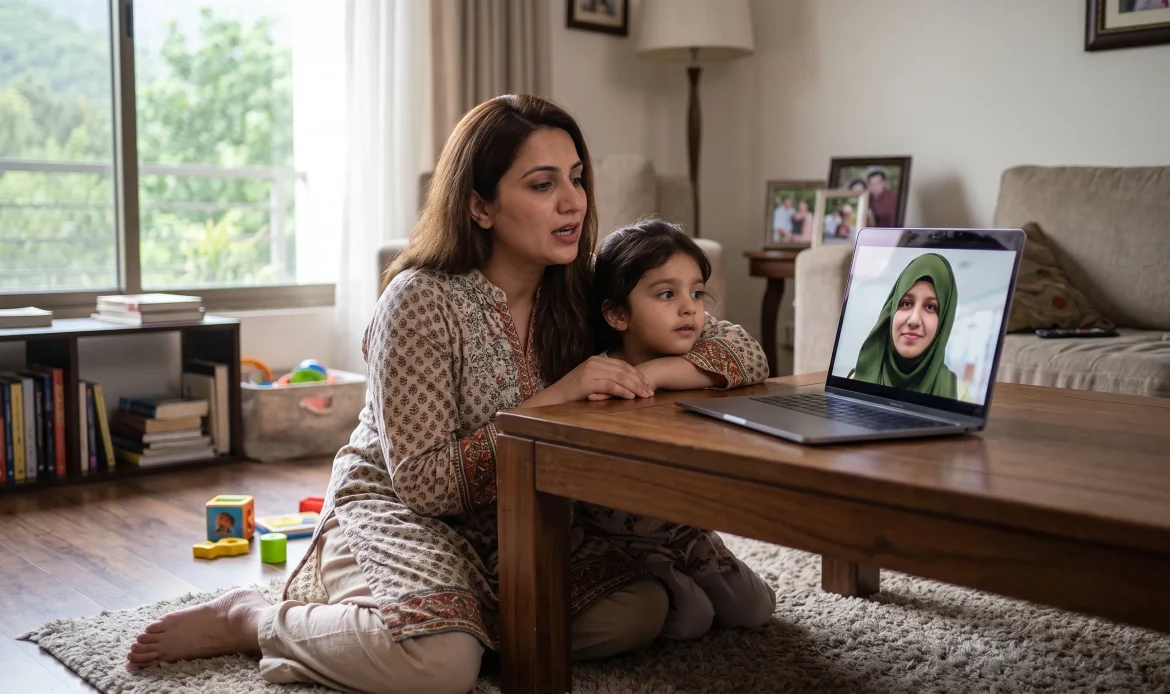
Looking for a child psychologist in Islamabad. SehatYab connects families across Islamabad and Rawalpindi with verified child and adolescent psychologists online, by private video or audio call. Sessions run in Urdu, English or Punjabi, with evening slots after school. The first appointment is usually parents only, and no clinic visit is needed.
- Rated 4.7 by 500+ patients on Google
- Licensed by the Punjab Healthcare Commission, licence R-05172
- Sessions in Urdu, English and Punjabi
- Audio, video and text chat, online only, no walk in clinic
- Serving Pakistan since 2016
What makes growing up in Islamabad different?
Islamabad looks like an easy place to raise a child. Wide roads, good schools, parks, hills at the end of the street. Most parents who book a child psychologist in Islamabad are not worried about any of that. They are worried about something the city's comfort tends to hide, and it usually turns out to be one of two things.
1. A city of postings, and childhoods that keep restarting
A large share of childhoods here are transient. Diplomatic families, development and UN organisations, the armed forces, the civil service, parents on foreign assignments, and families who have come back to Pakistan after five or ten years abroad. It is entirely normal for a twelve year old in Islamabad to have attended three schools already, in two or three countries.
Adults describe this as an enriching childhood, and it can be. It also does specific things to a child that nobody warns you about. A child who has said goodbye twice often stops investing the third time, friendly with everyone and close to no one, because there is no point starting something that ends at the next posting. A child schooled abroad and now sitting in a Pakistani classroom hits a reverse culture shock that looks like arrogance or sulking from the outside: the workload, the teaching style, the way you are expected to speak to a teacher, the language of the playground, the sudden requirement to be fluent in an Urdu he only ever heard at home. A teenager in this position often says the thing that worries parents most, which is that he feels foreign in both countries and belongs to neither. And in almost every one of these families there is an eldest child who holds things together at every move, who unpacks first, who reassures the younger ones, who is described as very mature, and whom nobody has ever asked how the moves felt.
2. The achievement bubble
Professional and civil service households, doctors, engineers, officers, academics, all living within a few sectors of each other, all comparing notes. Expectation here is high, specific and constant: the grades, the board result, the entry test, the cousin who got into medical college. Children absorb that early, and two patterns follow.
Some children become anxious about performance long before it matters, sleeping badly before a test in class four. Others are bright and struggling, and in a high achievement environment a bright child who cannot produce results is almost always read as lazy rather than assessed. Undiagnosed attention difficulties, a specific learning difficulty in reading or writing, or a slow processing speed can sit undetected for years in a child who is obviously intelligent in conversation, because everyone assumes intelligence and output are the same thing. By the time somebody suggests an assessment, the child has usually concluded he is stupid, and that belief takes longer to treat than the original difficulty.
Neither of these needs a crisis before you act. Most families who book child therapy in Islamabad come with something modest: he has gone quiet since we moved, she cries about school every Sunday night, his marks have dropped and nobody can explain why, the teacher says he is capable but not applying himself. Those are exactly the right reasons to book. Bachon ka psychologist Islamabad mein dhoondhna ab mushkil nahin hai. Islamabad child counselling online means you get a specialist appointment from your own sector, in the evening, without pulling a child out of anything.
Why is a specialist child appointment so hard to get in Islamabad?
Three facts that explain why the wait is long even in the capital.
Very few specialists, nationally
Pakistan has roughly 0.19 psychiatrists per 100,000 people, one of the lowest figures in the WHO Eastern Mediterranean Region, and an estimated 24 million people in the country need psychiatric assistance [2]. One recent analysis puts the ratio at about one psychiatrist per 360,000 people [3]. Child and adolescent specialists are a small fraction of that already small number.
These difficulties are common
Worldwide, about one in seven people aged 10 to 19 experiences a mental disorder, and the consequences of leaving those conditions untreated extend into adulthood [1]. In Pakistan, the National Psychiatric Morbidity Survey put lifetime prevalence of psychiatric disorders at 37.91% and current prevalence at 32.28% [4]. Whatever your child is going through, it is not rare.
A city that keeps changing around your child
Postings end, families relocate, friends leave mid term, and a child's whole social world can reset in a summer. Schools here are used to arrivals and departures, but they are not set up to notice the child who quietly stopped making friends after the second move.
Booking online removes the two barriers that stop most Islamabad families, the waiting list and the school hours appointment. Each psychologist's exact fee is shown on their SehatYab profile before you book, so there are no surprises.
Which parts of Islamabad and Rawalpindi do you cover?
All of them. Sessions run on a private Google Meet link, so your sector makes no difference to the appointment, and there is no clinic to drive to.
- F-6
- F-7
- F-8
- F-10
- F-11
- E-11
- G-6
- G-9
- G-10
- G-11
- G-13
- I-8
- I-10
- H-13
- DHA Islamabad
- Bahria Town
- Gulberg Greens
- PWD
- Media Town
- Ghauri Town
- Soan Gardens
- Chak Shahzad
- Bani Gala
- Rawalpindi
What does an online child appointment give you that a rushed clinic visit does not?
We are built for the problems that need history, context and follow up rather than a five minute verdict at the end of a long queue.
Appointments after school
Evening slots that sit after school, academy and tuition, so your child is not pulled out of anything and nobody at school needs to know.
Child specialists, not general therapists
Every clinician on this page works specifically with children and adolescents. Qualifications are verified before a clinician is listed, and their focus areas and languages are shown on each profile.
Parents included properly
The first session is usually parents only, and you stay part of the plan afterwards. Parent training in behaviour management is itself an evidence based treatment, not an add on [6].
Private, and it stays private
No waiting room in your own sector, and no chance of running into a neighbour or a colleague outside a clinic door. For families who move in small professional circles, this matters more than it should.
A format teenagers accept
Video from their own room, audio only if they prefer, or text chat counselling. Teenagers who flatly refuse to sit in a clinic will often agree to a screen.
Assessment where it is warranted
If the school has raised a concern, we tell you honestly what can be assessed online, what needs standardised in person testing, and what the results will and will not tell you. Start with our free assessments and tests.
Urdu, English, and children returning from abroad
Sessions run in Urdu, English, Punjabi or a mix, and one clinician on the wider panel consults in Pashto. This matters for a child who thinks in English after years at an international school and whose grandparents speak only Urdu.
Continuity when you move
Because it is online, treatment does not stop when a posting changes. A child who starts here can keep the same clinician from Karachi, Peshawar or another country, which is a real advantage for families who relocate.
Which child psychologists can Islamabad families book?
All four see children and teenagers online by private video call. Choose by what your child needs, or message us on WhatsApp and we will suggest a starting point.
 Children and teens
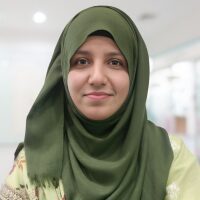
Mrs. Misbah Nosheen
Child Psychologist, 10 years and more of experience
Urdu, English, Punjabi
 Autism and ADHD
Ms. Syeda Hira Fatima
Clinical Psychologist, 7 years and more of experience
English, Urdu, Punjabi
 Learning and sensory
Ms. Asra Rafique
Clinical Psychologist, 7 years and more of experience
English, Urdu
 School adjustment
Ms. Salma Baber
Child and Adolescent Psychologist, 7 years and more of experience
English, Urdu
If your child answers most freely in Pashto, Ms. Sanam Kifayat Khan on the wider panel consults in Pashto, Urdu, English and Punjabi.
What do Islamabad parents book a child psychologist for?
If your worry is on this list, it is a normal reason to book. If it is not, book anyway and let a specialist decide whether it matters.
ADHD and attention
Cannot sit still, loses everything, starts ten things and finishes none, in trouble for the same thing every week. Assessment first, then a plan for home and school. For children under six, behaviour therapy is recommended before medication [5]. See ADHD.
Autism spectrum concerns
Late speech, little eye contact, distress at change, lining things up, difficulty joining other children. Developmental monitoring and screening exist precisely so concerns are picked up early rather than waited out [7]. See autism and autism counselling online.
Speech and social development
A toddler not talking as expected, or an older child who talks but cannot take turns, join in, or read a room.
Learning difficulties and falling grades
Bright in conversation, stuck on the page. Reading, writing or number difficulties that look like carelessness and are not. This is the single most common reason Islamabad parents are told their child is simply not trying.
School refusal
Stomach aches on Sunday night, tears at the gate, a teenager who has stopped going altogether. School refusal is almost always anxiety wearing a practical disguise, and it gets harder to reverse the longer it runs.
Exam and academic anxiety
Panic before tests, blanking in the paper, sleepless nights before results, a child who has decided that one bad board result ends everything. Very common in a city where everyone compares.
Separation anxiety
Cannot be left at school, at a relative's house, or alone in a room. Often flares after a move, a death in the family, or a parent leaving on a foreign posting.
Anger and behavioural outbursts
Meltdowns that go beyond age, damaged things, hitting siblings, a household organised around not setting him off. Behaviour plans work, and they work faster with a clinician guiding them. See behavioural therapy.
Adjusting after a move or a new school
New sector, new school, new country, or a return to Pakistan after years abroad. A child who has gone quiet, lost his appetite, or stopped asking to see anyone since the move needs help settling, not more time.
Teenage low mood and withdrawal
The bedroom door shut for months, friends dropped, hobbies abandoned, irritability where there used to be conversation. This is what teen mental health Islamabad parents ask us about most, and it is treatable. See teen counselling.
Screen and gaming overuse
Nights lost to a game, rage when the device is taken, schoolwork slipping. Usually a symptom of something else as well as a problem in itself, and both parts need addressing.
Parenting support and behaviour plans
Sometimes the most efficient appointment is the one your child never attends. Practical coaching for parents on routines, instructions and consequences that hold. See parenting counselling.
My teenager will not talk to anyone. What now?
This is the single most common thing parents in Islamabad say to us on the phone, and it is worth answering properly rather than reassuringly. Start with the most useful correction: a teenager refusing to talk to you is not a teenager refusing to talk to anyone. Those are two different facts and parents routinely merge them. Adolescents are separating from their parents, which is developmentally correct and extremely inconvenient. Many of the same young people who give their mother three words at dinner will talk for forty minutes to a stranger who is not going to worry, punish, cry, or repeat it at a family gathering.
The second thing to know is that you do not need his agreement to start. The first session is very often parent only. You describe what you are seeing, when it started, what the school says, what changed at home, and how he was before. The clinician gets a proper history and tells you three things: whether this looks like ordinary adolescence or something that needs treatment, what to change at home in the meantime, and how to raise the idea of a session with him in a way that does not read as a punishment. Some families get what they need from that appointment alone.
The third thing surprises most parents. Teenagers often open up more readily on a screen, from their own room, than in a clinic. There is no waiting room, no reception desk, no walking past somebody's mother in a corridor in F-7. They can keep the camera off for the first ten minutes. They can end the call themselves, which paradoxically makes them far less likely to want to. For the ones who will not speak at all at first, text chat counselling is a genuine route in, because typing is the native language of a sixteen year old and a great deal gets said in writing that would never be said out loud.
The fourth thing has to be said clearly at the start, to everyone. Confidentiality with a teenager is real, and it has limits. What he says in session is not reported back to you line by line, because therapy does not work if it is a surveillance channel. But the clinician will tell you if there is a risk to his safety or to anyone else's, and that boundary is explained to the young person and to the parents in the first session, in the same words, so nobody feels tricked later. Parents who understand this in advance almost always get better results, because the teenager can see that the room is genuinely his.
Five things that make a teenager more likely to say yes
- Do not present it as a consequence. It is not something he has earned by behaving badly.
- Offer a trial rather than a commitment. One session, and he can say afterwards whether he wants a second.
- Give him a choice of clinician. Choosing anything at all changes how he arrives.
- Let him take the call alone with the door shut. Hovering outside defeats the whole exercise.
- If he says no, book yourself in instead. Parent only work still changes what happens at home.
The school has suggested an assessment. What does that mean?
An honest answer about what online can do, what it cannot, and whether you need a psychologist or a psychiatrist.
Start with a child psychologist
A clinical or child psychologist is the right first appointment for most concerns: attention and behaviour, learning difficulties, school refusal, anxiety, low mood, social development, and anything the school has flagged. They take a full developmental history, gather what the teachers are seeing, screen for the likely explanations, and build a plan for home and classroom. Therapy for children is largely practical: skills, routines, exposure to feared situations in small steps, and parent coaching alongside it. Most families never need anything more than this.
When a child psychiatrist is needed
A psychiatrist is a medical doctor and is the right choice when medication is being considered, when the diagnostic picture is complex or unclear, when symptoms are severe, or when a formal diagnosis of ADHD or autism is required for school or documentation. Many children see a psychiatrist once for clarity and then continue with a psychologist. If you are unsure which you need, read psychiatrist vs psychologist or see our online child psychiatrist page.
Being honest about online assessment
A great deal can be done well by video: developmental and school history, structured questionnaires completed by parents and teachers, behavioural observation, screening for anxiety, mood and attention difficulties, and a clear clinical opinion about what is going on and what to do next. Some things cannot. Standardised cognitive and educational testing, meaning full IQ batteries, formal reading and writing assessments, and certain structured autism observation schedules, are designed to be administered face to face with physical materials, and doing them properly needs an in person appointment. If your child needs that, the clinician will say so plainly and tell you what the testing will and will not establish, rather than sending you for it by default. Our free online assessments are a screening starting point, not a diagnosis, and they are a useful thing to complete before the first appointment. If the concern is broader than one child, see child mental health conditions.
How do you book a child psychologist in Islamabad?
Four steps from worry to first appointment. Most Islamabad families are booked in under ten minutes.
Choose a specialist
Browse the child and adolescent panel, read what each clinician works with, and check their timings. Each psychologist's exact fee is shown on their SehatYab profile before you book.
Pick an evening slot
Choose a time after school and academy so your child is not pulled out of anything, and so nobody at school needs to know unless you decide to tell them.
Pay securely online
Debit or credit card, EasyPaisa, JazzCash or bank transfer. A private Google Meet link arrives by SMS and email.
First session, usually parents only
History, school feedback and your own observations. The clinician then tells you whether your child should join the next session, what assessment is appropriate, and what to do at home in the meantime.
You do not have to work out what the school meant on your own
One appointment with a child specialist usually turns a vague complaint into a clear description and a plan you can act on. Book from any sector of Islamabad or from Rawalpindi, in Urdu, English or Punjabi.
Questions Islamabad parents ask
If yours is not here, message us on WhatsApp and a person will answer.
SehatYab is an online clinic, not an emergency service
If your child, or someone close to you, is in immediate danger, at risk of self harm, or facing a medical emergency, contact the nearest emergency facility right away: Rescue and Ambulance 1122, Police 15, Edhi 115, Chhipa 1020, or the nearest government hospital emergency department. In Islamabad that includes PIMS and the Children's Hospital PIMS emergency department. Do not wait for a therapy appointment when there is immediate risk.
References
Sources reviewed for this page: the World Health Organization, the Centers for Disease Control and Prevention, the National Health Service in the United Kingdom, and peer reviewed research on mental health services in Pakistan.
- Mental health of adolescents, fact sheet. World Health Organization.
- WHO Pakistan celebrates World Mental Health Day. World Health Organization, Eastern Mediterranean Regional Office.
- Highlighting Pakistan's psychiatrist shortage amid a persistent mental health crisis. Journal of the Pakistan Medical Association.
- The National Psychiatric Morbidity Survey of Pakistan (2022): prevalence, socio demographic and disability correlates.
- Behavior therapy first for young children with ADHD. Centers for Disease Control and Prevention.
- Parent training in behavior management. Centers for Disease Control and Prevention.
- Developmental monitoring and screening. Centers for Disease Control and Prevention.
- Overview, cognitive behavioural therapy (CBT). NHS.
- Closing the mental health gap, transforming Pakistan's mental health landscape. Frontiers in Health Services, 2024.
Get an answer instead of another vague comment from the school
Book a child psychologist in Islamabad this week. Evening slots, private video call, Urdu, English or Punjabi, and a first appointment you can attend without your child even knowing yet.
More for parents
Other SehatYab pages Islamabad families read next.
Innovista Rawal, DHA Phase 1, Rawalpindi, Pakistan.
Phone: +92 304 111 2310. Online consultations only, no walk in clinic in Islamabad.
Licensed and regulated by Punjab Healthcare Commission (PHC), licence R-05172. Serving Pakistan since 2016.